
Enabling Governance Rights & Financial Sovereignty for Interspecies Cities
Starting with an Experiment in Meow-Driven Governance (🐈⬛,🗳️)

Interspecies Research Context
Since Jonathan Ledgard’s seminal work on interspecies money in late 2021 and Earth Species Project’s late 2022 presentation1 on AI-based interspecies communication, interspecies research has emerged as a transformative field2. At Transience Labs (Technologies of Coexistence), I have self-funded research into this domain, exploring how technology can bridge human-animal divides.
Initial Steps: Istanbul, 2023

In August 2023, I began drafting an experiment on interspecies governance, aiming to grant “governance rights” to cats3 in Istanbul, Türkiye, during Ethereum Foundation’s Devconnect that November. Although logistical challenges (e.g., hardware delays in customs) led to its cancellation, this initiative laid the groundwork for understanding system design, stakeholder dynamics, and the technical and financial architecture required for such projects.
2025 Research Pilot: Scope and Goals
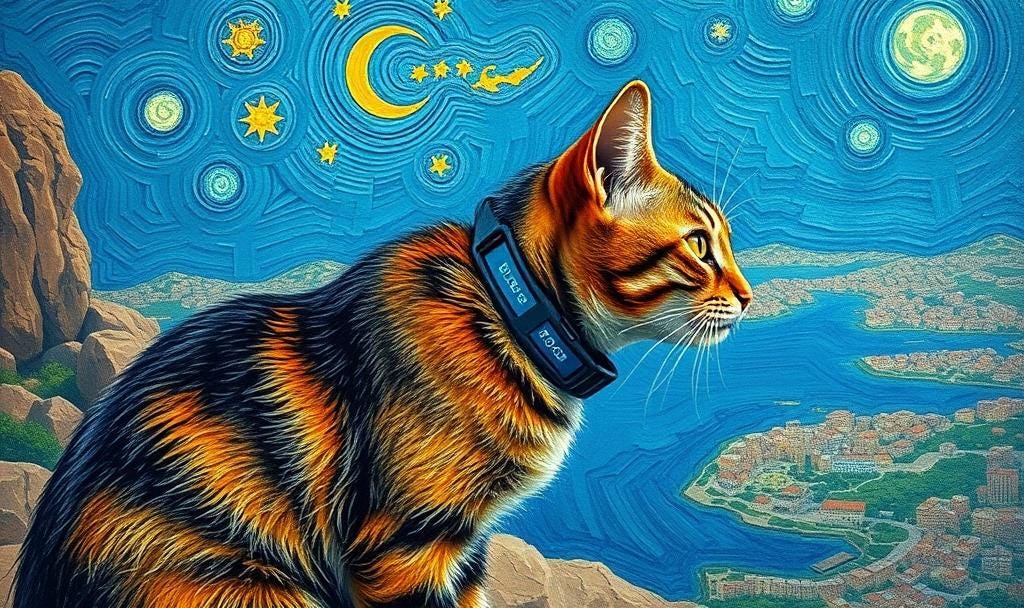
The current research pilot integrates web3, AI, and specialized tracking devices to study cat behavior in urban contexts. Its goals include:
• Budget Optimization: Creating data-driven proposals for local governments already managing stray animals.
• Interspecies Finance: Designing human incentives and the backbone token-engineered systems for animal welfare.
• Smart City Integration: Exploring stray-driven cryptographically secure4 mesh networks for decentralized urban ecosystems.
The current research pilot cycle is scheduled for March 16 - June 13, 2025, during the Black Skylab01 residency in Crete, Greece. Taking advantage of easy access to several target pilot locations across the Mediterranean, particularly the island of Cyprus, where the cat population surpasses the human population. The pilot will also be framed on my participation in Nature Governance Agency and Earth Law Center’s yearlong Dandelion Fellowship5, with the results of this and any subsequent pilots of the year planned to be presented during the days of COP30 next November in Brazil.
Wait! Why Cats?

OG Cypherpunks: Cats can organically contribute to cryptographically secure networks such as blockchains, just by, well… being cats. Mario Havel initially researched this under an Ethereum Foundation grant as the Proof-of-Cat proposal, which is “a novel approach to generating randomness for cryptographic systems, utilizing the inherent unpredictability and entropy of domestic felines, also known as cats.”
Cultural Power: Cats dominate internet culture, as seen with Nala Cat’s estimated net worth of USD 100M6 and approximate earnings of USD 14K per social media post. But, how much of this is actually under Nala’s control? How much benefits her human owners instead of other cats? How many other pet influencers are in a similar position? How many cats candidly recorded IRL go unpaid on the internet?
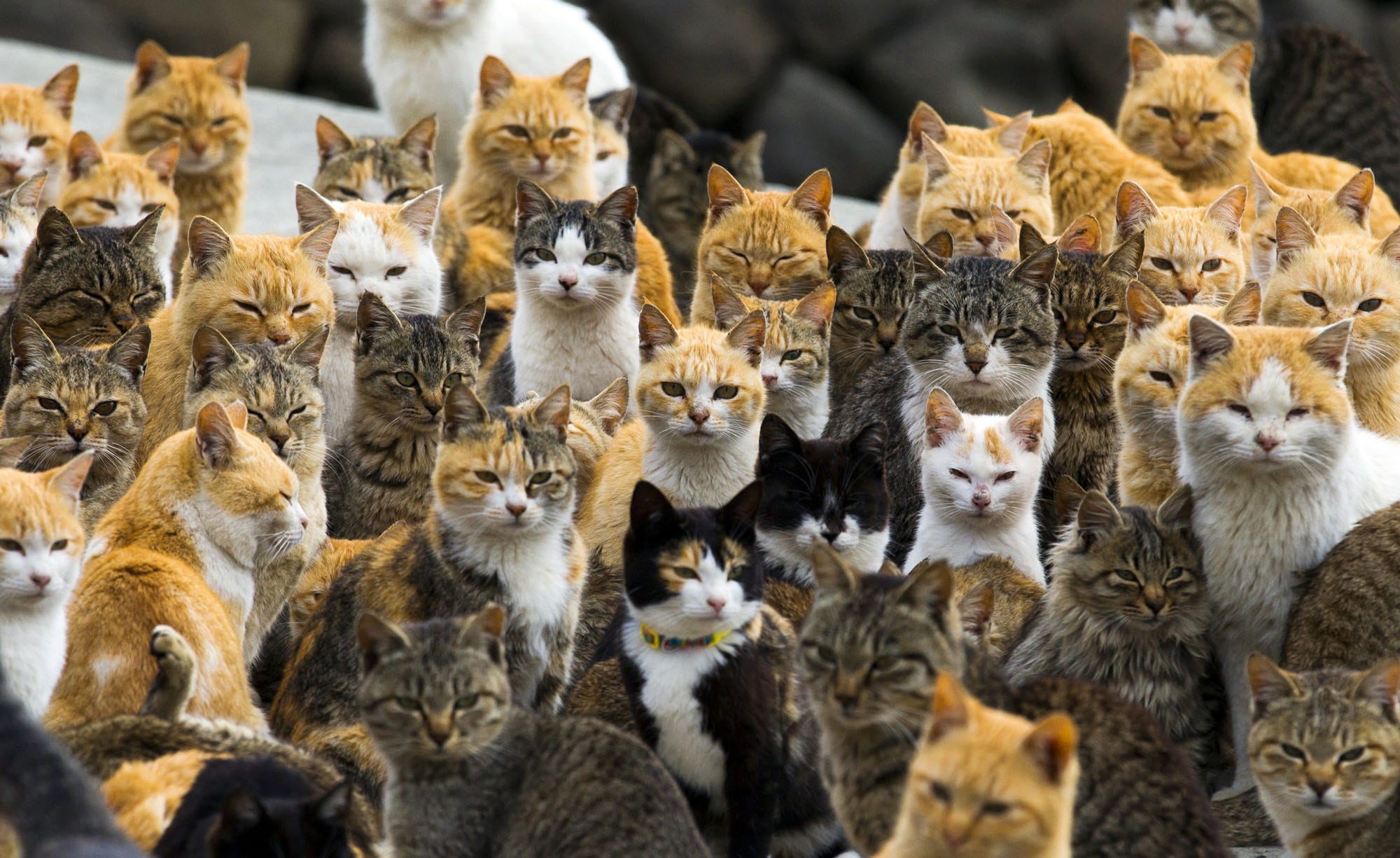
Thriving Population: There are a lot of cats!7 And while stray cat populations thrive globally, euthanasia remains a reality. In 2023, around 330,000 cats were euthanized in U.S. shelters due to overcrowding, health issues, behavioral problems, and resource limitations. Solutions like spaying/neutering, increased adoptions, and better funding could reduce euthanasia rates.8 Could influencer cats transfer funds for other cats to avoid euthanasia?
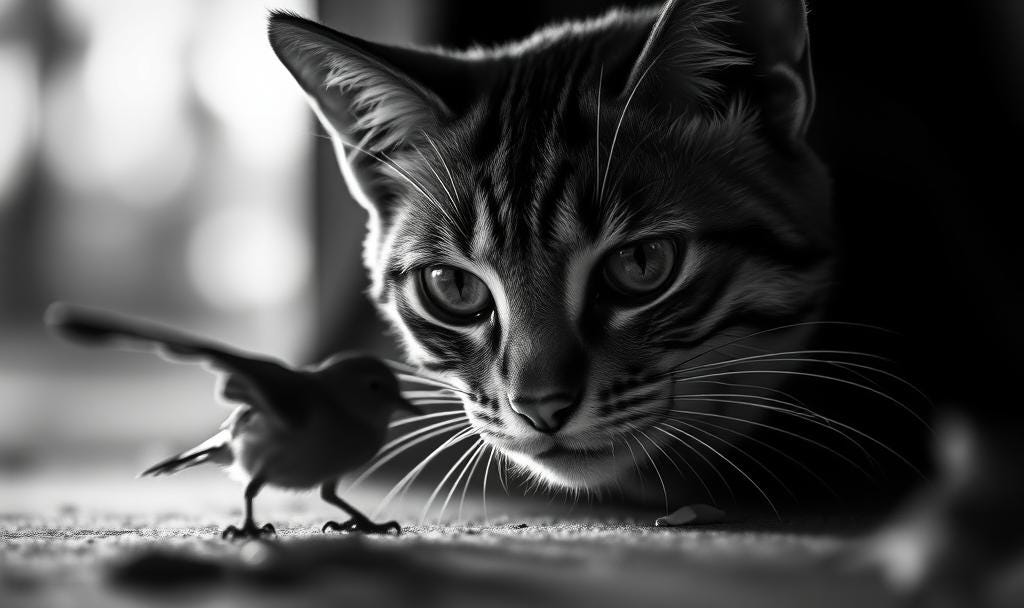
Ecological Impact: Die stubentiger impact 587 IUCN Red List species worldwide.9 Could this cuteness be leveraged? Studies have shown that conservation bias it’s a reality10, and that we prefer animals that fit certain criteria, kindchenschema, which perfectly explains the effect of smol cats and dogs as well as the famous pygmy hippo, Moo Deng. Could cat populations endowed with the unfair advantage of cuteness and already “earning their keep” in an interspecies finance future pay penalties for negatively impacting other species?
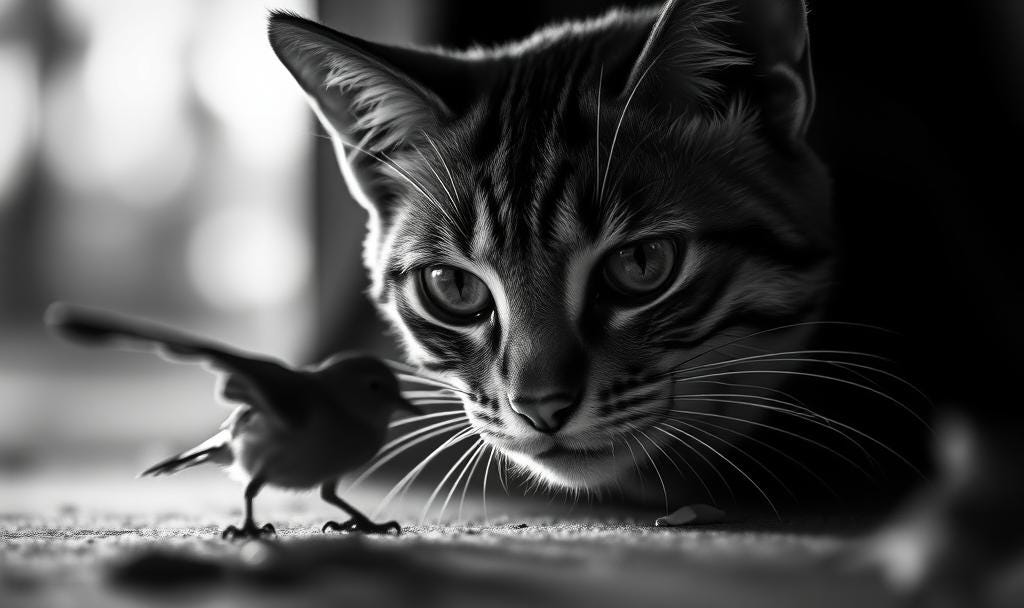
Finally, what over 10+ years ago seemed like a stand-up comedy sketch is now viable given the convergence of different exponential technologies, nascent interspecies research, alongside cases, and updated legal frameworks to provide legal personhood to nature.11
Pilot Phases & Locations
The pilot is structured into phases: initial implementations at Black Skylab01 residency in Crete, Greece. Based on this first outcome, other tests will be scheduled and run during the yearlong Dandelion Fellowship.
Phase I. Municipal Budget Optimization via Behavioral Mapping
This phase is the most complex since it requires testing the capabilities of several smart devices and possibly custom ones. Objectives:
A) Analyze cat behavior, through their interactions and patterns in an urban context with smart devices to propose budget reallocations to governments financially committed12 to managing strays.
B) A validated DePIN (Decentralized Physical Infrastructure Network) architecture.
Phase II. Interspecies Money
Test human incentives, such as tax cuts, tied to interspecies financial frameworks.
Phase III. Stray-Driven Mesh Networks for Smart Cities (Parts I & II)
Phase IV. Comprehensive Interspecies Cities Governance & Finance Framework
Bonus Phase: Memetic Approaches to Interspecies Finance
Contributions and Collaboration
To follow or contribute to this work, join our Telegram and X channels, where ongoing updates will be shared. Collaborative input is essential to refine this nascent field and bring interspecies cities closer to reality.
https://www.brookings.edu/articles/interspecies-money-is-here/
https://www.wired.com/story/artificial-intelligence-translation-animal-sounds-human-language/
https://www.newyorker.com/magazine/2024/10/21/how-scientists-started-to-decode-birdsong
https://www.businessinsider.com/ai-elephants-discovery-call-each-other-by-name-study-2024-6
Yes, it’s possible with dogs and other city-dwelling animal groups.
Cryptographic security relies on highly unpredictable and unique patterns to generate entropy, which is essential for securing cryptographic operations. Felines, with their independent, varied, and erratic movements and behaviors, provide a naturally chaotic source of entropy. Mario Havel's EF-supported work leverages these traits, showing how cats' randomness can be effectively captured for cryptographic use. Other animal groups may lack the same combination of randomness, individuality, and ease of digital capture, making felines uniquely suited for this application.
Dandelion Fellowship’s pilot cohort is the first-ever program for the co-development of Nature proxies representing the interests of Nature in organizations. I believe that we can take a step further and aim for nature to represent itself as we interpret the signals coming from different living systems.